
Pain is often dismissed as “normal” or something to endure, but it is the body’s warning signal. When ignored, pain doesn’t fade—it intensifies, adapts, and delays healing. This is why timely care from a pain intervention specialist through advanced pain management is essential for long-term recovery and mobility.
Many patients reach a pain management clinic in Indore only after months or years of discomfort. By then, pain pathways are deeply established, making recovery slower and more complex. Understanding why pain should not be ignored is the first step toward healing effectively.
What Happens When Pain Is Ignored
Pain is not just a symptom—it is a signal of underlying tissue stress, inflammation, nerve irritation, or biomechanical imbalance. When pain is ignored, the body compensates in unhealthy ways.
Common consequences include:
- Reduced movement leading to stiffness
- Muscle weakness due to disuse
- Altered posture and gait
- Increased stress on joints and spine
Clinical studies suggest that untreated pain lasting more than 3 months often becomes chronic, requiring more intensive intervention. Early assessment by qualified pain management consultants helps prevent this progression.
Why Ignoring Pain Slows the Healing Process
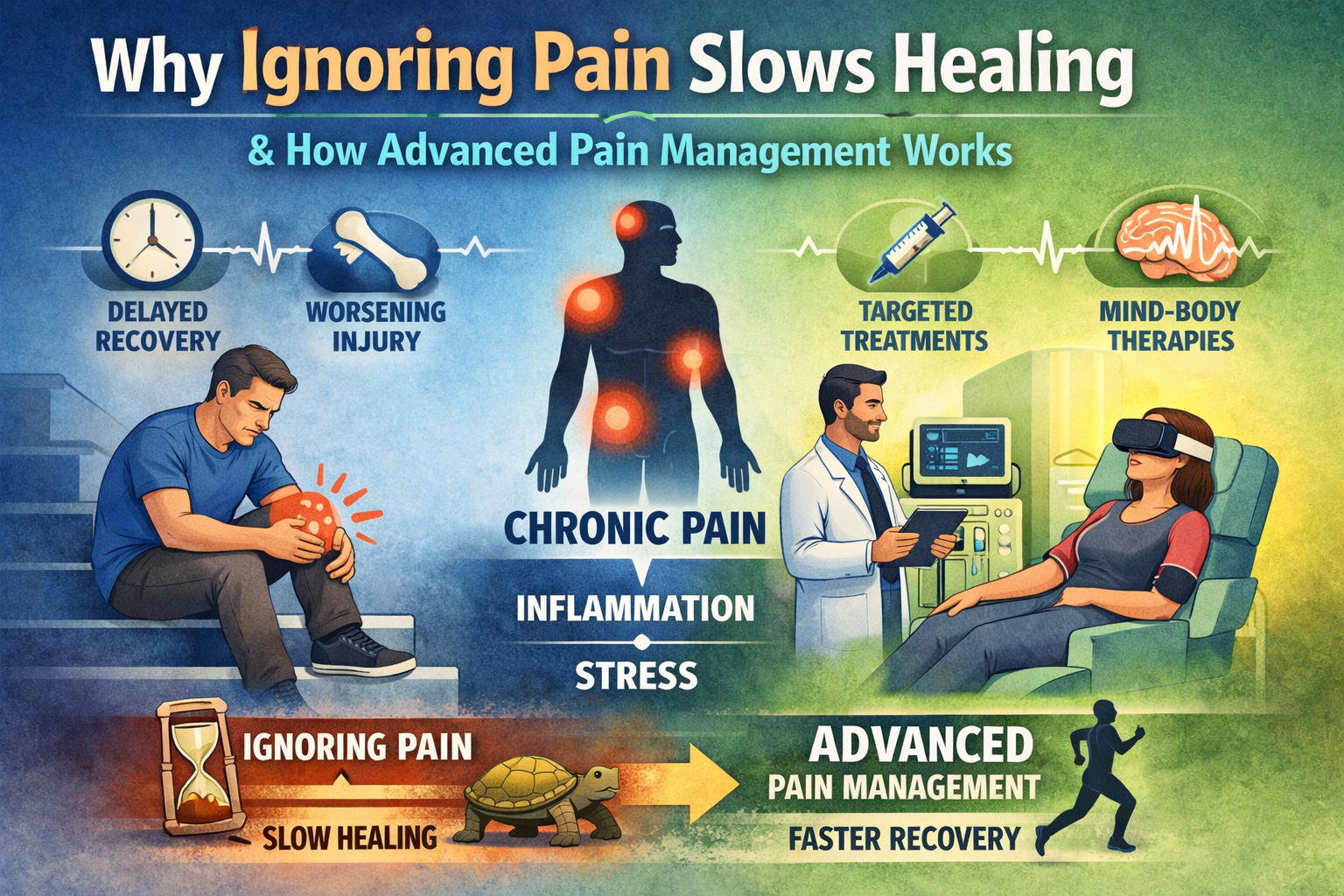
Healing requires movement, circulation, and proper muscle function. Persistent pain interferes with all three.
Here’s how:
- Pain causes protective muscle tightening, restricting blood flow
- Limited movement reduces oxygen and nutrient delivery
- Inflammation remains unresolved
- Neural pain pathways become overactive
According to medical research, patients who delay pain treatment experience up to 40% longer recovery times compared to those who receive early pain management care.
Example:
A patient with mild lower back pain avoids activity due to discomfort. Over time, weakened core muscles increase spinal stress, converting a manageable condition into chronic pain requiring advanced intervention.
How Advanced Pain Management Works
Advanced pain management focuses on treating the root cause of pain, not just suppressing symptoms. It combines accurate diagnosis with targeted, non-invasive therapies.
The process typically includes:
- Clinical pain assessment and movement analysis
- Identification of musculoskeletal, nerve, or postural causes
- Personalised treatment planning
- Progressive rehabilitation
At a specialised pain management clinic in Indore, this approach ensures pain relief while restoring function, strength, and confidence.
Role of Pain Management Consultants in Recovery
Experienced pain management consultants play a key role in guiding treatment. They evaluate pain patterns, lifestyle factors, posture, and movement habits to design personalised care plans.
Their expertise helps:
- Avoid unnecessary surgery
- Reduce dependence on pain medication
- Improve treatment precision
- Monitor recovery progress safely
Evidence shows that patients under consultant-led pain programs achieve better functional outcomes and faster return to daily activities.
How Exercise to Reduce Pain Supports Healing
Contrary to common belief, rest alone does not heal pain. The right exercise to reduce pain promotes circulation, strengthens muscles, and retrains movement patterns.
Benefits include:
- Reduced inflammation
- Improved joint stability
- Better posture and alignment
- Enhanced nerve mobility
Advanced pain management programs integrate corrective exercises based on the patient’s condition—ensuring safety and effectiveness. When guided properly, exercise becomes a powerful healing tool rather than a trigger for pain.
Tips to Prevent Pain from Becoming Chronic
1. Don’t Delay Pain Assessment
Pain lasting more than a few days should be evaluated to prevent chronic progression.
2. Seek Expert Guidance
Consult trained pain management consultants for accurate diagnosis.
3. Follow a Structured Treatment Plan
Consistency in therapy accelerates healing and prevents relapse.
4. Incorporate Exercise to Reduce Pain
Targeted exercises improve mobility and strength safely.
5. Address Posture and Daily Habits
Correct movement reduces repeated stress on affected areas.
Why Choosing the Right Pain Management Clinic Matters
A multidisciplinary pain management clinic in Indore offers comprehensive care—combining diagnostics, therapy, and rehabilitation under one roof. This integrated approach improves recovery outcomes and ensures continuity of care.
Such clinics focus on:
- Root-cause treatment
- Evidence-based therapies
- Patient education
- Long-term pain prevention
Conclusion
Ignoring pain doesn’t make it disappear—it makes recovery harder. Advanced pain management works by identifying the cause, restoring movement, and supporting the body’s natural healing process. With timely care, expert guidance, and the right exercise approach, long-term relief is achievable.
FAQs: Advanced Pain Management
1. When should I visit a pain management clinic?
If pain persists beyond 1–2 weeks or interferes with daily activities, professional evaluation is advised.
2. Can exercise really reduce pain?
Yes. Properly guided exercise to reduce pain improves circulation, strength, and mobility, aiding recovery.
3. Is advanced pain management suitable for older adults?
Absolutely. Treatments are customised based on age, condition, and tolerance.
4. Do pain management consultants only treat chronic pain?
No. Early-stage pain benefits greatly from consultant-guided intervention.
5. Does advanced pain management replace surgery?
In many cases, it helps patients avoid or delay surgery by resolving underlying issues.