
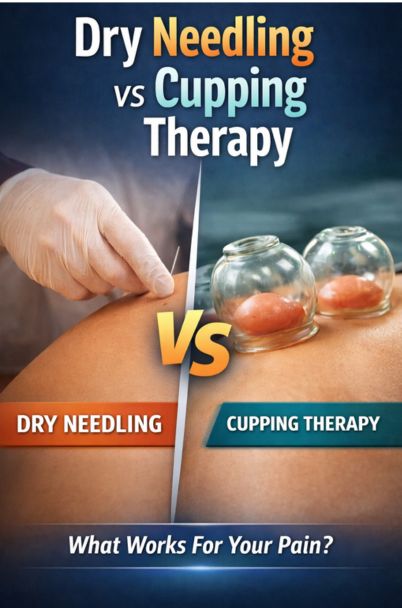
Pain can slow your life down—whether it’s neck stiffness, shoulder tightness, knee pain, or deep muscle knots that just won’t go away. When exercises and medicines don’t give enough relief, many people search for advanced physiotherapy options like physiotherapy dry needling and cupping therapy.
But the big question patients ask is:
Dry Needling vs Cupping Therapy – which one actually works for your pain?
Let’s break it down in a simple, honest, and practical way—so you can make the right decision for your body.
What Is Dry Needling & Why Is Everyone Talking About It?
Dry needling treatment is an advanced physiotherapy technique where very thin, sterile needles are inserted into trigger points (tight muscle knots that cause pain).
These trigger points restrict blood flow, reduce movement, and send pain signals to other areas. Dry needling directly targets these knots and helps muscles relax naturally.
Why physiotherapists recommend dry needling
- Releases deep muscle tightness
- Improves blood circulation
- Reduces nerve irritation
- Restores muscle function faster
- Works well when exercises alone don’t help
People often search online for dry needling physiotherapy near me because it delivers fast and long-lasting relief, especially for chronic pain.
What Is Cupping Therapy & Why Does It Feel Relaxing?
Cupping therapy is an ancient technique where suction cups are placed on the skin to improve blood flow and reduce muscle stiffness.
Unlike dry needling, cupping works more on the surface and surrounding tissues, not deep trigger points.
Benefits of cupping therapy
- Relieves superficial muscle tension
- Improves circulation
- Reduces inflammation
- Promotes relaxation
- Helps in muscle recovery
Many patients love cupping because it feels soothing and helps with stress-related muscle tightness.
Dry Needling vs Cupping Therapy – The Real Difference Explained Simply
| Aspect | Dry Needling Physiotherapy | Cupping Therapy |
| Pain depth | Deep muscle knots | Surface muscles |
| Technique | Thin needles | Suction cups |
| Relief speed | Fast & targeted | Gradual |
| Best for | Chronic pain, trigger points | Muscle stiffness, relaxation |
| Sensation | Mild twitch or soreness | Pulling sensation |
| Results | Long-term correction | Short-term relief |
If your pain is deep, recurring, or movement-related, dry needling physiotherapy usually works better.
If your pain is stress-related or muscular tightness, cupping therapy can help.
Which Pain Conditions Respond Better to Dry Needling?
Dry needling is especially effective for:
- Neck and shoulder pain
- Lower back pain
- Sciatica
- Knee pain
- Sports injuries
- Frozen shoulder
- Postural pain
- Headaches caused by muscle tension
This is why many patients actively search for physiotherapy dry needling when other treatments fail.
When Is Cupping Therapy a Better Choice?
Cupping therapy works well if you have:
- Muscle fatigue
- General body stiffness
- Stress-related pain
- Poor blood circulation
- Recovery needs after workouts
It’s often used along with physiotherapy, not as a standalone solution for severe pain.
Can Dry Needling and Cupping Be Combined?
Yes—and this is where expert physiotherapy matters.
Many advanced clinics combine:
- Dry needling treatment for deep trigger points
- Cupping therapy for muscle relaxation and circulation
- This combination speeds up recovery and improves long-term outcomes.
👉 You can learn more about our integrated pain-relief approach here:
advanced physiotherapy pain management treatment
What Does Dry Needling Feel Like? Is It Painful?
This is a common fear.
- Most patients feel:
- A brief muscle twitch
- Mild soreness for 24–48 hours
- Significant pain relief afterward
- The needles used are extremely thin—much finer than injection needles.
Real Patient Experiences (Testimonials)
⭐ “I had chronic neck pain for 6 months. One dry needling session gave me more relief than weeks of medication.”
— Ankit R., IT Professional
⭐ “Cupping felt very relaxing, but dry needling actually fixed my shoulder pain.”
— Neha S., Homemaker
⭐ “I was scared of needles, but the physiotherapist explained everything. Totally worth it.”
— Rahul M., Gym Enthusiast
Tips to Get the Best Results from Dry Needling Physiotherapy
Always choose a certified physiotherapist
- Combine dry needling with corrective exercises
- Stay hydrated after sessions
- Follow post-treatment advice
- Avoid heavy workouts for 24 hours
Searching for dry needling physiotherapy near me is only step one—choosing the right expert makes all the difference.
Final Verdict: What Works Best for Your Pain?
There is no “one-size-fits-all” answer.
Choose dry needling physiotherapy for deep, chronic, movement-related pain
Choose cupping therapy for relaxation and muscle stiffness
Combine both for faster, holistic recovery
If pain is affecting your daily life, don’t ignore it—the right physiotherapy approach can change everything.
FAQs – Dry Needling vs Cupping Therapy
1. Is dry needling safe?
Yes. When performed by a trained physiotherapist, dry needling treatment is extremely safe and evidence-based.
2. How many sessions are required?
Some patients feel relief in 1–2 sessions, while chronic conditions may need 4–6 sessions depending on severity.
3. Can dry needling permanently cure pain?
Dry needling removes muscle trigger points, but long-term results depend on posture correction, exercises, and lifestyle changes.