
Think physiotherapy is just someone twisting your arm and asking you to breathe? Think again.
If you haven’t visited a physio clinic recently — or if your last memory of physiotherapy is lying on a bed with a heat pack in 2015 — you are in for a genuine surprise. The world of physiotherapy has changed so dramatically in the last decade that even doctors who refer patients to physio clinics are still catching up.
Whether you’ve been searching for the best physiotherapy center in Indore after a nagging back injury, or you’re a working professional whose neck pain has simply gone out of control, this article is going to change how you think about getting better.
Let’s break it all down — simply, honestly, and without any medical jargon.
What Has Actually Changed in Physiotherapy Over the Last 10 Years?
Ten years ago, physiotherapy was largely reactive. You got injured. You waited. You went to a clinic. Someone gave you ice or heat. You did a few generic exercises. Maybe you felt better, maybe you didn’t.
Today, it is completely different.
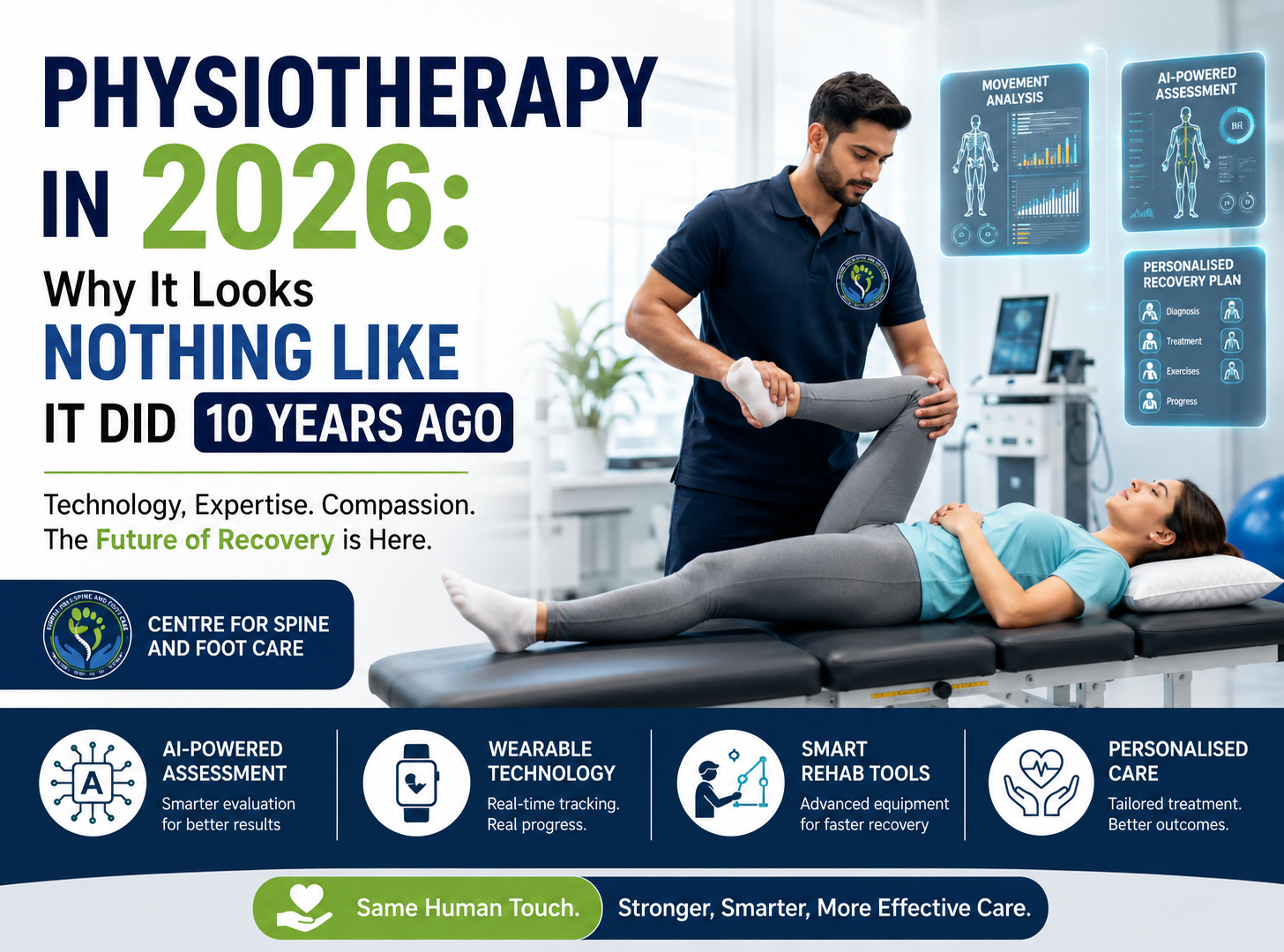
Modern physiotherapy in 2026 is proactive, personalised, and powered by technology. A good physiotherapist today does not just treat your pain — they figure out why you have it in the first place. They look at your posture, your movement patterns, your lifestyle, your work habits, even how you sleep.
The shift from “treating symptoms” to “fixing root causes” is the single biggest change in the profession
Why Are More People Choosing Physiotherapy Over Surgery and Painkillers?
This is a question we hear constantly at the best physiotherapy clinic near me searches across India, and the answer is simple: because it works, and it works without side effects.
Painkillers give temporary relief. Surgery carries risk. But physiotherapy — when done properly — addresses the actual problem.
Research now confirms that for conditions like back pain, knee pain, frozen shoulder, sciatica, and even post-surgical recovery, physiotherapy produces outcomes as good as or better than surgery in most cases. Patients who commit to a structured physiotherapy plan recover faster, stay recovered longer, and return to their normal lives sooner.
According to the World Physiotherapy Organisation, physiotherapy is now among the most evidence-based healthcare interventions available globally — and demand is rising sharply because patients are finally seeing real results.
This is exactly why the physiotherapy clinic in Indore has seen a massive rise in patient footfall — people are done with temporary fixes.
How Modern Physiotherapy Treats You Differently — 5 Real Changes You’ll Notice
1. Your First Session Is Now a Deep Assessment, Not Just a Treatment
Walk into a good clinic today and the first thing your physiotherapist will do is listen. They’ll ask about your daily routine, your pain history, your job, your habits. Then they’ll watch you walk, sit, bend, and move.
This assessment tells them more than any X-ray. It shows them where your body is compensating, where the weakness is hiding, and exactly which muscles have switched off.
2. Dry Needling, Shockwave Therapy and TENS Are Now Mainstream
These are not “fancy extras” anymore. They are evidence-backed techniques that are now standard at any best physiotherapy center in Indore.
Dry needling releases muscle knots at the trigger point level. Shockwave therapy accelerates healing in tendons and ligaments. TENS (Transcutaneous Electrical Nerve Stimulation) blocks pain signals at the nerve level — giving fast relief while the deeper healing happens.
3. Exercise Rehabilitation is the Core of Every Plan
Forget passive treatments where you just lie there. The best physiotherapists today are essentially movement coaches. They design specific exercise progressions for your body, your injury, and your goals.
This is why recovery sticks in 2026. You don’t just feel better — you become stronger, more stable, and much less likely to get hurt again.
4. Telehealth and Home Programmes Are Part of the Package
You don’t have to be in the clinic every single day. Great physiotherapy today includes a structured home exercise programme, follow-up check-ins, and even virtual sessions where appropriate.
This means your recovery continues even when you’re not in the room.
5. Sports Rehabilitation Has Become a Specialisation of Its Own
From weekend cricket players to professional athletes, sports rehab is now an entirely different branch of physiotherapy. Return-to-sport protocols are designed with precision — there is a clear roadmap from day one of injury to the day you step back onto the field with full confidence.
Tips: How to Get the Most Out of Your Physiotherapy Sessions
Getting physiotherapy right is a two-way effort. Here is what actually makes the difference:
Show up consistently. One session a week with no home exercises gives poor results. Two to three sessions a week with daily home exercises gives transformation.
Tell your physio everything. Don’t just describe the pain — describe your whole day. What makes it worse? What makes it better? When did it first start? The more context, the better the treatment plan.
Don’t stop when the pain stops. Pain disappearing is not the finish line — it is the beginning. Most re-injuries happen because people stop physio the moment they feel better, before the underlying weakness has been addressed.
Ask questions. A good physiotherapist at the best physiotherapist in Indore will always explain what they are doing and why. If you don’t understand your treatment plan, ask until you do.
What Conditions Does Modern Physiotherapy Treat? (Spoiler: A Lot More Than You Think)
Many people still associate physiotherapy only with back pain or sports injuries. But if you walk into a well-equipped physiotherapy clinic in Indore today, you will find treatment for:
Back pain, neck pain, sciatica, frozen shoulder, knee and hip pain, post-surgical rehabilitation, sports injuries, neurological conditions like stroke recovery, vertigo and balance disorders, women’s health and pelvic floor iss
ues, workplace-related RSI, postural correction, and chronic pain conditions.
If you’re in pain and unsure whether physiotherapy can help — the honest answer is: it almost certainly can.
Ready to Experience What Real Recovery Feels Like?
If you’ve been putting off treatment because you didn’t know where to start, now you do. Modern physiotherapy is not what it used to be. It is faster, smarter, and far more effective — and the right clinic makes all the difference.
Centre for Spine and Foot Care — Visit Our FREE Camp from 5th June to 15th June
Take this opportunity to get a professional assessment, understand your pain, and start your recovery journey — completely free. Walk in, bring your reports if you have them, and meet our team of specialists. Limited slots available.
Frequently Asked Questions (FAQs)
Q1. How many physiotherapy sessions will I need before I start feeling better?
Most patients begin noticing improvement within 3 to 5 sessions for acute conditions like muscle strain or mild back pain. Chronic conditions that have been present for months or years may take 8 to 12 sessions or more. Your physiotherapist will give you a realistic timeline after your initial assessment.
Q2. Is physiotherapy painful?
Some techniques like dry needling or deep tissue mobilisation can cause temporary discomfort, but physiotherapy should never be severely painful. A good physiotherapist always works within your comfort level and explains what to expect. Short-term mild soreness after a session is normal — it means the body is responding.
Q3. Should I see a doctor first before visiting a physiotherapy clinic?
Not always. You can walk directly into a best physiotherapy clinic near me without a doctor’s referral for most musculoskeletal issues like back pain, knee pain, neck pain, or sports injuries. However, if you have had a recent accident, fracture, or surgery, a doctor’s clearance is recommended first.
Q4. Is physiotherapy only for injuries, or can I go for prevention?
Absolutely for prevention. In fact, the smartest thing you can do is visit a physiotherapist before the injury becomes serious. Postural assessment, strength screening, and movement analysis can catch problems early — before they become painful and expensive.