
We live in a culture obsessed with quick fixes. The moment lower back stiffness sets in or neck tightness strikes, mattress advertisements convince us that dropping thousands of rupees on a brand-new orthopaedic bed is the ultimate cure.
While a supportive sleeping surface certainly matters, it is rarely the underlying reason your spine hurts. Your spine consists of 33 stacked vertebrae, sensitive intervertebral discs, spinal cord nerves, and a complex network of deep stabilizer muscles.
When you spend eight hours sleeping in awkward positions or sitting slouched at a desk, gravity imposes a continuous mechanical strain on these delicate structures.
The truth is simple: you do not need an expensive mattress upgrade to safeguard your back.
By making small biomechanical adjustments to your daily routine, you can decompress your vertebrae, relieve nerve pressure, and build a resilient core.
Whether you are seeking preventive relief or navigating complex conditions requiring physiotherapy for spinal cord pain, these five science-backed habits will transform how your spine feels every single day.
Understanding the Hidden Forces Driving Spinal Pain
To fix back pain, you must understand how pressure moves through your body. According to clinical data published by the World Health Organization (WHO), low back pain remains the leading cause of disability globally, affecting over 619 million people worldwide.
The vast majority of these cases stem not from bone defects, but from mechanical dysfunction—poor posture, spinal cord nerve compression, muscle imbalances, and joint stiffness.
When your spine stays locked in abnormal positions, the intervertebral discs lose their natural cushioning abilities. Over time, this leads to bulging discs, pinched nerves, sciatica, and severe localized discomfort.
Addressing these biomechanical issues early through structured spinal injury physiotherapy prevents minor strain from escalating into chronic neurological or structural conditions.
Tip 1: Master Strategic Pillow Ergonomics to Neutralize Spinal Pressure
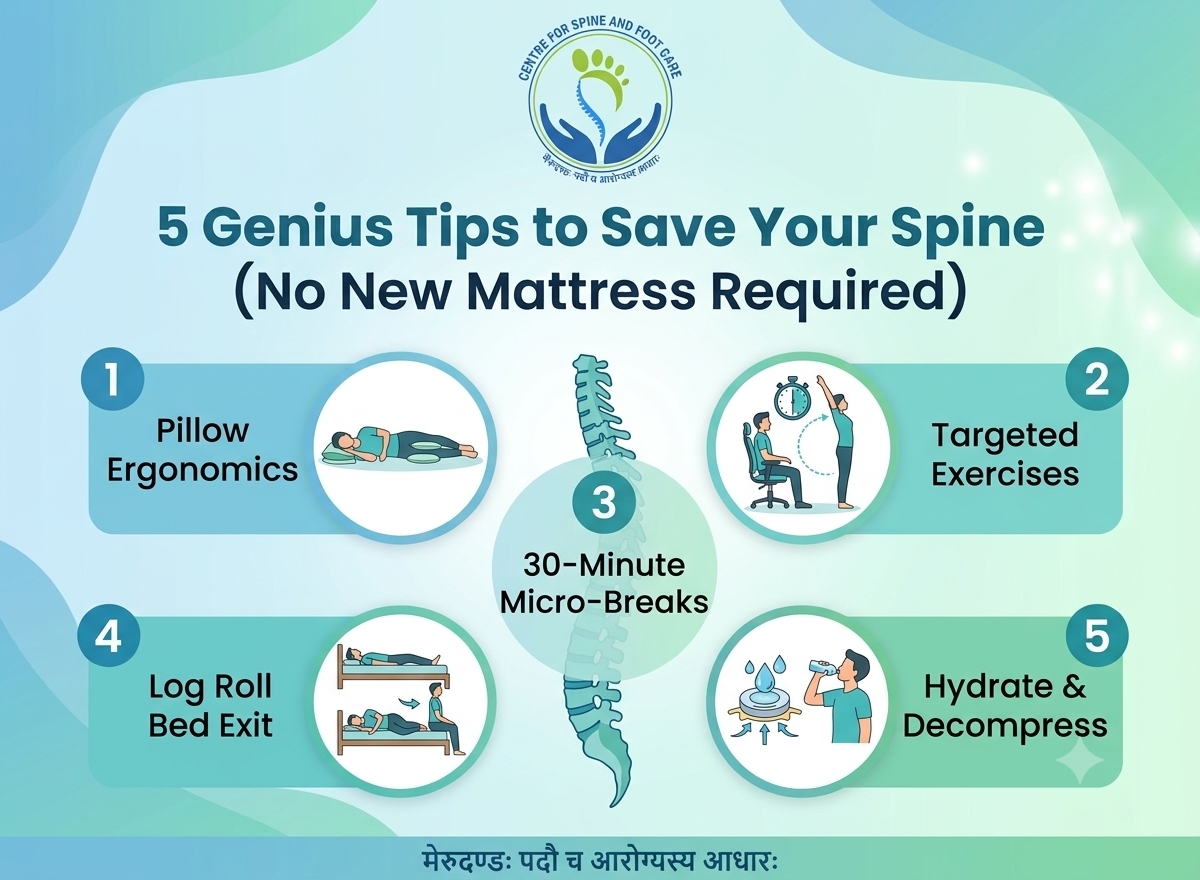
Instead of buying a new mattress, leverage your existing pillows to maintain the natural ‘S’ curve of your spine throughout the night.
When you lie down, gravity flattens your natural lumbar arch or twists your hips out of alignment. By introducing targeted pillow support, you neutralize shearing forces on your intervertebral discs and reduce muscle spasms.
- For Side Sleepers: Place a firm pillow directly between your knees and ankles. This prevents your top leg from sliding forward and twisting your pelvis out of alignment, keeping your hips and lumbar spine stacked.
- For Back Sleepers: Tuck a soft pillow under your knees. This slight knee bend reduces tension on your hip flexors and flattens your lower back against the bed, easing mechanical strain on the lower lumbar joints.
- For Cervical Support: Use a contoured neck roll that supports the hollow behind your neck rather than elevating your entire head.
Tip 2: Implement Targeted Physiotherapy Exercises for Core and Spinal Stability
Your core acts as a natural internal back brace. When deep postural muscles—such as the transversus abdominis and multifidus—are weak, your spinal joints carry the full weight of your upper body. Engaging in targeted physiotherapy exercises for spinal cord injury and chronic back pain restores structural balance and shields your spinal cord from undue pressure.
Key exercises to incorporate daily include:
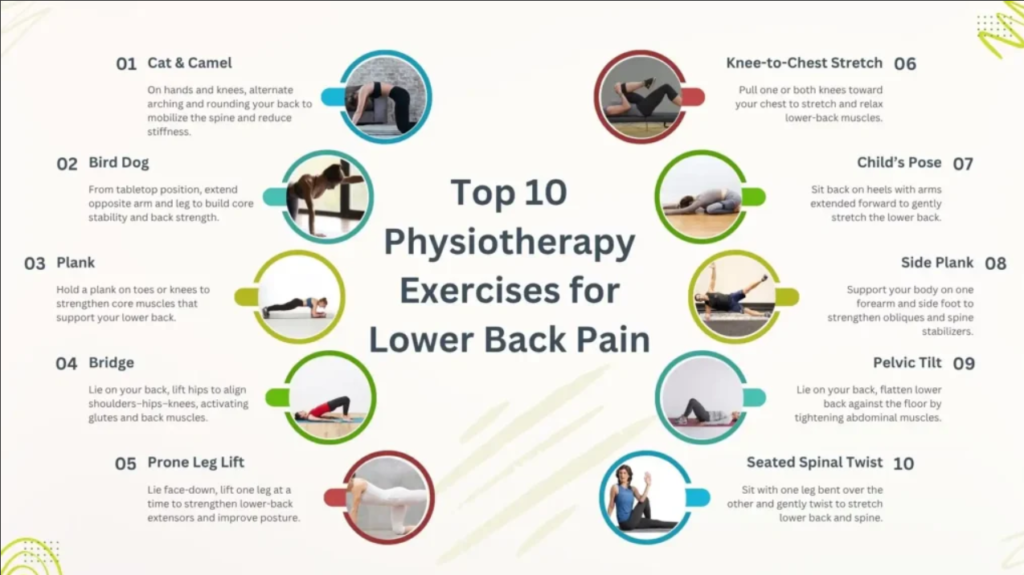
- The Bird-Dog: On all fours, extend opposite arm and leg while maintaining a flat back to build rotational stability.
- Pelvic Tilts: Lie on your back, flatten your lower back against the floor by bracing your core, hold for 5 seconds, and release.
- Cat-Camel Stretch: Gently arch and round your spine on hands and knees to circulate nourishing synovial fluid through stiff spinal joints.
For individuals recovering from trauma or nerve damage, specialized spinal cord injury physiotherapy treatment offers structured neuromuscular re-education to safely restore movement, balance, and nerve function under expert supervision.
Tip 3: Break the Sitting Transgressions with the 30-Minute Micro-Break Rule
Prolonged sitting increases intra-discal pressure by nearly 40% compared to standing. When you slouch at a desk, your head shifts forward, forcing your neck muscles to hold up extra weight and loading immense compressive stress onto your lower lumbar spine.
To protect your back:
- Set a timer to stand up every 30 minutes.
- Perform 3 quick standing back extensions by placing your hands on your lower back and gently leaning backward.
- Keep your monitor at eye level to prevent “tech neck” strain.
Tip 4: Utilize the “Log Roll” Method for Pain-Free Bed Exits
How you get out of bed in the morning dictates how your back muscles perform for the rest of the day. Snapping straight up using your abdominal muscles creates an intense compression spike across your spinal discs, which often triggers acute muscle spasms or disc herniation flares.
Instead, execute the safe Log Roll Technique:
- Bend your knees while lying on your back.
- Roll your entire body—shoulders, torso, and hips together—onto your side.
- Drop your legs over the edge of the bed.
- Use your arms to push your upper body smoothly into an upright sitting position.
This simple technique is a cornerstone of post-operative care in spinal surgery physiotherapy, helping patients protect vulnerable spinal segments while building independence during recovery.
Tip 5: Hydrate and Decompress Your Discs Daily
Your intervertebral discs consist mostly of water. Throughout the day, gravity squeezes fluid out of these discs, causing you to lose a small fraction of height by evening. Dehydration compromises disc height and reduces shock absorption, leaving your spinal cord nerves vulnerable to irritation.
- Drink at least 2.5 to 3 liters of water daily to maintain disc hydration.
- Spend 5 minutes every evening in the Passive Lumbar Decompression position: lie on your back on a soft mat with your lower legs resting comfortably on a chair at a 90-degree angle. This position takes all weight off your lower spine, allowing discs to rehydrate naturally before sleep.
Clinical Success Stories & Proven Rehabilitation Results
When home habits are combined with professional clinical care, recovery rates improve significantly. Patients dealing with severe nerve pain, post-surgical recovery, or complex spinal trauma benefit from comprehensive evaluations tailored to their specific biomechanics.
“I was suffering from severe lower back shooting pain and morning stiffness for over 9 months. I thought I needed a costly orthopaedic bed or spine surgery. After seeking specialized physiotherapy for spinal cord injury and learning proper biomechanical exercises, my pain dropped by 85% in just four weeks without any expensive equipment.”
Anand K., Scheme 78, Indore
“Post my lumbar disc surgery, I was terrified of moving. The team guided me through gentle spinal surgery physiotherapy and taught me proper bed transfers and core stabilization. Today, I am completely back to my daily routine pain-free!”
Priyanka M., Vijay Nagar, Indore
When Home Fixes Aren’t Enough: Seeking Professional Care
While these five habits provide immediate structural relief, chronic conditions require specialized medical assessment. If you experience persistent shooting pain down your legs, progressive muscle weakness, numbness, or loss of bowel/bladder control, seek professional care immediately.
Specialized clinics offering physiotherapy for spinal cord pain utilize advanced modalities such as mechanical spinal decompression, manual therapy, TECAR therapy, and custom gait corrections to address root cause mechanics and deliver long-term spinal health.
Frequently Asked Questions (FAQs)
Q1. How does physiotherapy help with spinal cord pain and disc pressure?
Physiotherapy targets the mechanical root causes of back pain. By incorporating spinal decompression techniques, manual therapy, and core stabilization, specialized rehab takes compressive pressure off irritated nerves, reduces local inflammation, and restores natural joint alignment.
Q2. Are physiotherapy exercises safe after undergoing spinal surgery?
Yes, but they must be guided by a specialist in spinal surgery physiotherapy. Post-operative rehab begins with gentle nerve gliding, safe bed transfers, and isometric core stabilization to prevent scar tissue formation and ensure smooth structural healing.
Q3. Can specialized exercises help patients recovering from a spinal cord injury?
Absolutely. Structured physiotherapy for spinal cord injury utilizes neuro-rehabilitation techniques, weight-bearing training, balance restoration, and targeted strengthening to stimulate neuroplasticity, improve functional mobility, and prevent secondary joint contractures.
Q4. How long does it take to see results from spinal physiotherapy exercises?
Most patients report noticeable relief from acute stiffness and nerve irritation within 2 to 4 weeks of consistent, guided exercise practice. Chronic structural recovery or post-surgical rehab may take 8 to 12 weeks of structured therapy.