
We have all been there. You twist your ankle during a morning jog, wake up with a stiff neck after working late at your desk, or feel that familiar dull ache in your lower back after a heavy gym session. Your first instinct is to head over to the freezer for an ice pack or grab a heating pad. But right before you apply it, you hesitate.
“Should I be freezing this pain or heating it up?”
Using the wrong temperature therapy won’t necessarily cause severe harm, but it can accidentally increase inflammation, prolong swelling, or make muscle spasms feel far worse.
Knowing when to apply ice and when to turn on the heat is one of the simplest, most effective ways to manage daily pain right at home. In this comprehensive guide, we breaks down the real science behind thermal therapy, when to use ice versus heat, how to treat specific conditions, and when it is time to consult a expert for long-term recovery.
The Simple Rule of Thumb: Ice for Acute, Heat for Chronic
If you are looking for a quick, memory-friendly formula to save you time, keep this in mind:
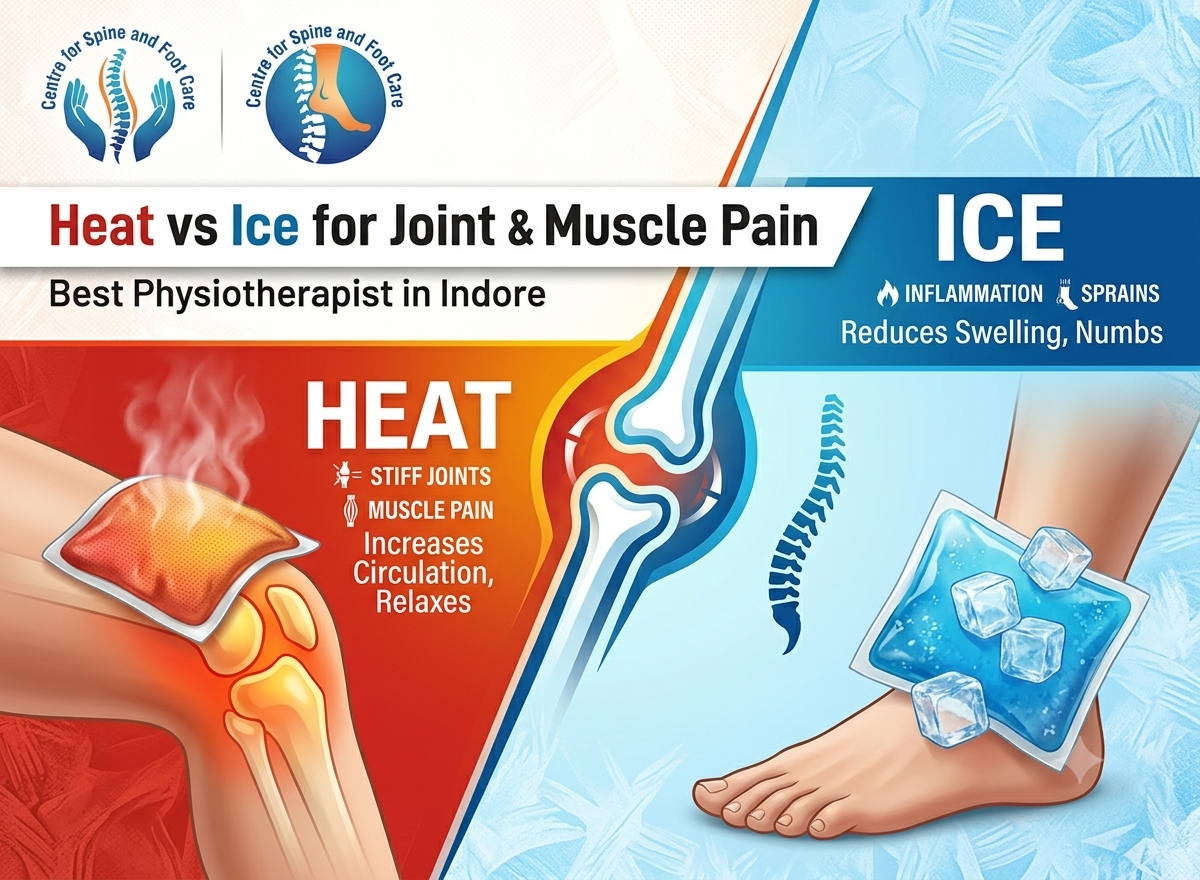
- Ice is for Injuries (Acute Pain): Think red, hot, swollen, sharp, or brand-new. Ice numbs sharp pain and calms down sudden inflammation.
- Heat is for Health & Healing (Chronic Pain): Think stiff, tight, dull, lingering, or achy. Heat relaxes tense muscles and promotes blood circulation to stiff joints.
Let’s dig deeper into how each therapy actually works inside your tissue.
Understanding Cryotherapy (Ice Therapy)
When you apply cold to an injured area, it causes blood vessels to narrow—a process known in medical terms as vasoconstriction.
By restricting local blood flow, cold therapy drastically reduces swelling, bruising, and fluid accumulation in the tissue. Additionally, ice slows down nerve signal transmission, effectively numbing sharp pain signals before they reach your brain.
Best Uses for Ice:
- Fresh Sprains & Strains: Ankle twists, pulled hamstrings, or wrist sprains within the first 24 to 48 hours.
- Post-Workout Soreness: Soothing micro-tears in muscles after an intense session.
- Gout Flaring & Acute Arthritis: Calm down inflamed, throbbing joint flare-ups.
- Tendinitis & Tendonitis Drops: Sharp, pinpoint pain around tendons (like Tennis Elbow or Achilles soreness).
How to Apply Ice Safely:
- Never place ice directly on bare skin. Always wrap an ice pack, frozen gel pad, or bag of frozen peas in a thin cloth or towel to avoid ice burns.
- Stick to 15–20 minute cycles. Leaving ice on for too long can trigger a “rebound effect,” where the body pumps extra blood to the region to protect skin temperature, increasing swelling.
- Follow the R.I.C.E protocol for fresh injuries: Rest, Ice, Compression, and Elevation.
Understanding Thermotherapy (Heat Therapy)
Heat works in the exact opposite way of cold. Applying warmth causes blood vessels to dilate—a process called vasodilation.
Opening up these blood channels floods the painful area with oxygenated blood, vital nutrients, and fresh white blood cells while flushing out metabolic waste products like lactic acid. Heat also relaxes tight muscle fibers, increases soft tissue flexibility, and soothes joint stiffness.
Best Uses for Heat:
- Chronic Muscle Stiffness: Tight shoulder knots, lingering lower back aches, and stiff postural muscles.
- Joint Arthritis: Morning stiffness in knees, hips, or hands that gets better as you move.
- Muscle Spasms & Cramps: Sudden or recurring tight muscle contractions.
- Pre-Workout Warm-Up: Loosening up stiff joints or old injuries before physical activity.
How to Apply Heat Safely:
- Choose between Moist and Dry Heat. Moist heat (warm baths, steamed towels, moist heating pads) penetrates deeper into muscle tissue than dry electric heating pads.
- Keep temperatures comfortable, not scalding. Heat should feel soothing, never burning.
- Apply for 15 to 20 minutes at a time. If treating deep muscle spasms, a warm bath for 20–30 minutes works wonders.
- Avoid heat on fresh, swollen injuries. Applying heat to a hot, puffy ankle will only drive more blood into the damaged region, increasing swelling and throbbing pain.
Quick Reference Guide: What to Use for Common Aches
| Condition / Symptom | Primary Recommendation | Why It Works |
| Fresh Ankle Sprain (First 48 Hrs) | ICE | Reduces internal bleeding, prevents excess swelling, numbs sharp pain. |
| Chronic Lower Back Stiffness | HEAT | Increases blood flow, relaxes tight postural muscles, restores movement. |
| Arthritis Knee Pain (Morning Stiffness) | HEAT | Lubricates the joint capsule and eases early morning stiffness. |
| Arthritis Knee Pain (Swollen After Walking) | ICE | Calms joint inflammation after overexertion. |
| Neck Strain / Tension Headache | HEAT | Eases tight neck traps and suboccipital muscles causing headache tension. |
| Sudden Muscle Spasm or Cramp | HEAT | Forces blood into locked muscle tissue to break the spasm cycle. |
| Post-Workout Soreness (DOMS) | ICE or CONTRAST | Numb aching muscles or alternate heat/ice to speed recovery. |
What Is Contrast Therapy? (When to Combine Both)
Can’t decide between ice and heat? You might not have to choose!
Contrast Therapy involves alternating between hot and cold applications. This technique creates a natural physical “pumping” action: heat opens blood vessels (vasodilation) and ice constricts them (vasoconstriction).
This alternating cycle accelerates lymphatic drainage, removes stubborn fluid accumulation, and reduces residual soreness.
How to Do Contrast Therapy at Home:
- Apply Heat for 3–4 minutes.
- Switch immediately to Ice for 1 minute.
- Repeat this cycle 3 to 4 times, always ending with cold to minimize residual swelling.
Contrast therapy is widely used in sports rehabilitation for chronic sprains, plantar fasciitis, and repetitive stress injuries.
Beyond Temperature: When Home Remedies Aren’t Enough
While heating pads and ice bags are excellent for temporary daily management, they don’t fix structural misalignment, poor foot biomechanics, spinal disc herniation, or chronic joint degeneration.
If you find yourself constantly relying on ice packs or heat pads just to make it through the workday, your body is sending you a clear signal that it needs targeted professional care.
If you are dealing with persistent spinal discomfort, disc issues, or lingering mobility struggles, consulting a specialized physiotherapist center near me can help identify the root cause of your pain rather than simply masking symptoms.
When looking for holistic spinal realignment and physical rehab, exploring comprehensive care like chiropractic treatment in indore alongside evidence-based physiotherapy can significantly accelerate long-term relief.
Comprehensive Care in Central India
For residents living in MP, finding high-quality conservative care makes all the difference in avoiding unnecessary surgeries or lifelong pain medication dependency.
Whether you are suffering from neck stiffness due to long hours at work, sciatica shooting pain, or sport injuries, getting an accurate assessment from a qualified chiropractor in indore or an experienced physiotherapist in indore is essential.
At a modern, well-equipped physiotherapy clinic in indore, treatments extend far beyond simple heat or cold packs. Patients receive advanced care modalities such as:
- Laser therapy and TECAR therapy for deep tissue healing.
- Spinal decompression and targeted joint mobilization.
- Customized foot biomechanics assessment for gait alignment.
- Gentle spinal adjustments to relieve trapped nerves.
Choosing the best physiotherapy center in indore ensures you receive personalized exercise rehabilitation tailored specifically to your body type, lifestyle, and recovery goals. Working directly with the best physiotherapist in indore helps restore joint mechanics, build core strength, and prevent recurring injuries so you can live an active, pain-free life.
Real Patient Recovery Stories
“I suffered from severe lower back stiffness and sciatica for over 8 months. I was using heat belts every single night with zero long-term relief. After visiting the clinic for a combined physical evaluation and posture correction, my pain reduced by 80% in just three weeks! The guidance on biomechanics was a complete game-changer.” Rameshwar V., Vijay Nagar, Indore
“As a marathon runner, knee inflammation used to pull me off the track for months. Learning when to use ice right after runs and getting targeted manual therapy at the center helped me recover faster than ever. Highly recommend their professional team!” Pooja S., Scheme 140, Indore
Summary Checklist for Daily Pain Management
Before you reach for a hot towel or freezer gel pack today, run through this mental checklist:
- Is the area swollen, red, warm, or bruised? Use Ice.
- Did the injury happen in the last 48 hours? Use Ice.
- Is the pain a dull ache, stiff muscle, or chronic tight knot? Use Heat.
- Are you preparing to stretch or exercise stiff joints? Use Heat.
- Has the pain persisted for over 10 days despite home treatment? Book a Professional Assessment.
Frequently Asked Questions (FAQs)
Q1. Can I use heat on a fresh sports injury or sprain?
No. Applying heat to a fresh injury (within the first 48 hours) dilates blood vessels, increasing blood flow to the region. This causes significantly more internal swelling, throbbing pain, and tissue inflammation. Always use ice wrapped in a thin towel for new injuries.
Q2. How long should I apply ice or heat during a session?
Keep sessions to 15–20 minutes maximum. Continuous application beyond 20 minutes can cause skin irritation or skin tissue stress with ice, or cause skin burns and rebound blood vessel expansion with heat.
Q3. When should I stop self-treating at home and see a specialist?
If your pain does not improve after 3 to 5 days of home thermal therapy, if swelling continues to worsen, or if you experience numbness, tingling, or severe sharp pain while moving, consult a specialist immediately. Getting evaluated at a professional physiotherapy clinic in indore ensures accurate root-cause diagnosis.
Q4. Is chiropractic adjustment safe alongside physiotherapy treatment?
Yes! Combining gentle spinal adjustments with targeted physiotherapy rehabilitation provides a comprehensive dual approach. Chiropractic care helps realign joint mechanics and relieve nerve compression, while physiotherapy builds surrounding muscle strength to keep your spine supported long-term. You can consult a qualified chiropractor in indore to build an integrated rehab routine.