
Back pain has become one of the most common health issues today—whether you’re a working professional, student, or homemaker. But here’s the real concern: not all back pain is the same.
Many people ignore early symptoms, assuming it’s just muscle strain, when it could actually be a slip disc. Understanding the difference can help you avoid long-term complications and get the right Slip Disc Pain Treatment at the right time.
What Is Normal Back Pain?
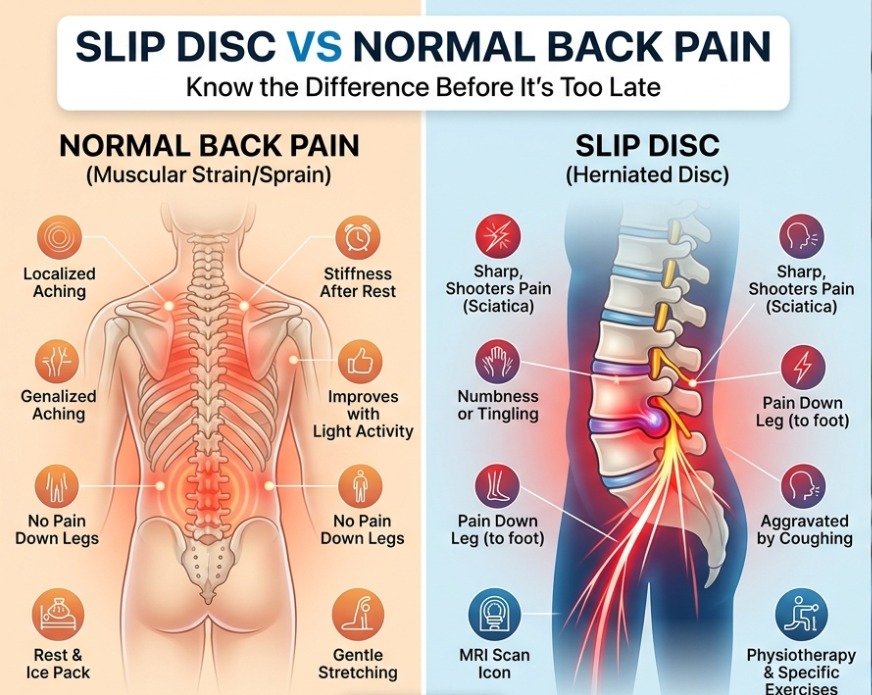
Normal back pain usually occurs due to muscle strain, poor posture, or overuse. It is temporary and often improves with rest and basic care.
Common Causes:
- Sitting for long hours
- Incorrect posture
- Sudden movements or lifting heavy objects
- Lack of physical activity
Symptoms:
- Dull or aching pain
- Pain that improves with rest
- No radiating pain in legs
In most cases, treatments for back pain & slip disc differ because normal pain doesn’t involve nerve compression
What Is a Slip Disc?
A slip disc (also known as herniated or prolapsed disc) occurs when the soft cushion between your spinal bones slips out of place and presses on nearby nerves.
This condition requires timely attention and proper lower back pain slipped disc treatment to avoid worsening.
Common Causes:
- Aging and disc degeneration
- Sudden injury or trauma
- Heavy lifting with wrong posture
- Long-term sitting lifestyle
Symptoms:
- Sharp or severe pain
- Pain radiating to legs (sciatica)
- Numbness or tingling
- Muscle weakness
Slip Disc vs Normal Back Pain – Key Differences
| Factor | Normal Back Pain | Slip Disc |
| Pain Type | Mild to moderate | Sharp, severe |
| Duration | Short-term | Long-lasting |
| Radiating Pain | No | Yes (legs/arms) |
| Numbness/Tingling | No | Common |
| Recovery | Quick with rest | Needs professional care |
If your pain includes radiating discomfort or numbness, it’s time to consider expert back pain slipped disc treatment in Indore.
Why Early Diagnosis Matters
Ignoring a slip disc can lead to serious complications like:
- Chronic pain
- Reduced mobility
- Nerve damage
- Weakness in limbs
Early diagnosis ensures faster recovery and avoids surgery in most cases. At a professional physiotherapy clinic, advanced Slip Disc Pain Treatment focuses on non-surgical recovery methods.
Learn more about effective recovery options with our expert-led Slip Disc Pain Treatment programs.
How Physiotherapy Helps in Slip Disc Treatment
Physiotherapy is one of the most effective and safest treatments for back pain & slip disc.
1. Pain Relief Techniques
- Electrotherapy
- Heat/cold therapy
- Manual therapy
2. Strengthening Exercises
Targeted exercises help:
- Improve spine stability
- Reduce pressure on discs
- Prevent recurrence
3. Posture Correction
Poor posture is a major cause of both conditions. Physiotherapists guide:
- Sitting posture
- Workstation setup
- Movement patterns
4. Lifestyle Guidance
Patients are educated about:
- Safe lifting techniques
- Daily activity modifications
- Weight management
For those searching for reliable back pain slipped disc treatment in Indore, physiotherapy offers long-term relief without dependency on medicines.
How to Identify When It’s Serious
Don’t ignore your back pain if you notice:
- Pain lasting more than 1–2 weeks
- Pain spreading to legs
- Tingling or numbness
- Difficulty in walking or standing
These are warning signs that you may need immediate lower back pain slipped disc treatment.
Tips to Prevent Slip Disc & Back Pain
Prevention is always better than cure—especially when it comes to spine health.
Maintain Correct Posture
Avoid slouching while sitting or using mobile phones.
Stay Active
Regular exercise keeps your spine strong and flexible.
Lift Smartly
Always bend your knees, not your back.
Take Breaks
If you sit for long hours, take short breaks every 30–40 minutes.
Strengthen Core Muscles
A strong core supports your spine and prevents injuries.
When Should You Visit a Specialist?
You should consult a physiotherapy expert if:
- Pain is severe or persistent
- Home remedies are not working
- You experience nerve-related symptoms
Getting the right Slip Disc Pain Treatment at the right time can make all the difference in recovery.
Conclusion
Understanding the difference between normal back pain and a slip disc is crucial for timely treatment. While normal pain may resolve on its own, a slip disc requires expert attention and structured care.
If you’re dealing with ongoing discomfort, don’t wait—seek professional treatments for back pain & slip disc and take the first step toward a pain-free life.
FAQs
1. How do I know if my back pain is a slip disc?
If your pain radiates to your legs, includes numbness, or feels sharp and persistent, it could be a slip disc.
2. Can slip disc heal without surgery?
Yes, most cases recover with physiotherapy and proper Slip Disc Pain Treatment without surgery.
3. What is the best treatment for slip disc?
Physiotherapy, posture correction, and strengthening exercises are the most effective lower back pain slipped disc treatment options.
4. Where can I get the best back pain slipped disc treatment in Indore?
You can consult a specialized physiotherapy clinic that offers advanced, non-surgical solutions tailored to your condition.