
Summary of the Blog
Navigating post-surgical pain requires more than passive bed rest and oral painkillers. Modern physical rehabilitation focuses on root-cause biomechanical stabilization, micro-circulation acceleration, and targeted spinal-pelvic alignment. By combining non-invasive technology (such as High-Velocity Laser Therapy and Acoustic Shockwave) with precise manual joint mobilization, modern rehabilitation protocols compress recovery timelines significantly. This guide outlines how leading practitioners address surgical stiffness, break down deep scar adhesions, and safely restore natural movement patterns without over-stressing healing tissues.
Introduction: Moving Beyond Traditional Post-Operative Rest
Surgeries such as total knee replacements, rotator cuff repairs, ACL reconstructions, and spinal discectomies are designed to repair structural damage. However, post-surgical pain and swelling often stall a patient’s journey back to normalcy. Traditional recovery protocols heavily relied on immobilization and prolonged pharmaceutical pain management.
Today, advanced physical therapy shifts the paradigm: Movement is Medicine when applied with surgical precision. Consulting an expert physiotherapist in indore allows post-op patients to transition safely from guarded, painful shifts to full, fluid mobility.
1. Early Neuromuscular Re-Education & Edema Control
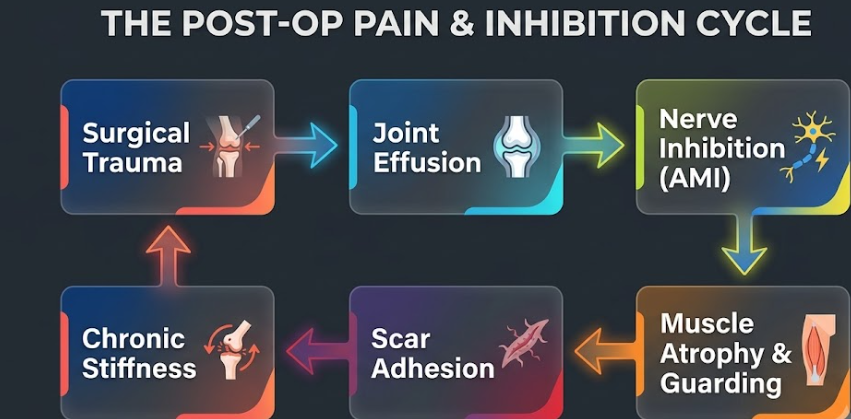
The immediate aftermath of surgery triggers an inflammatory cascade. While inflammation is essential for cellular repair, excess joint effusion (fluid buildup) inhibits surrounding muscle activation—a phenomenon known as Arthrogenic Muscle Inhibition (AMI).
How Advanced Clinics Intervene:
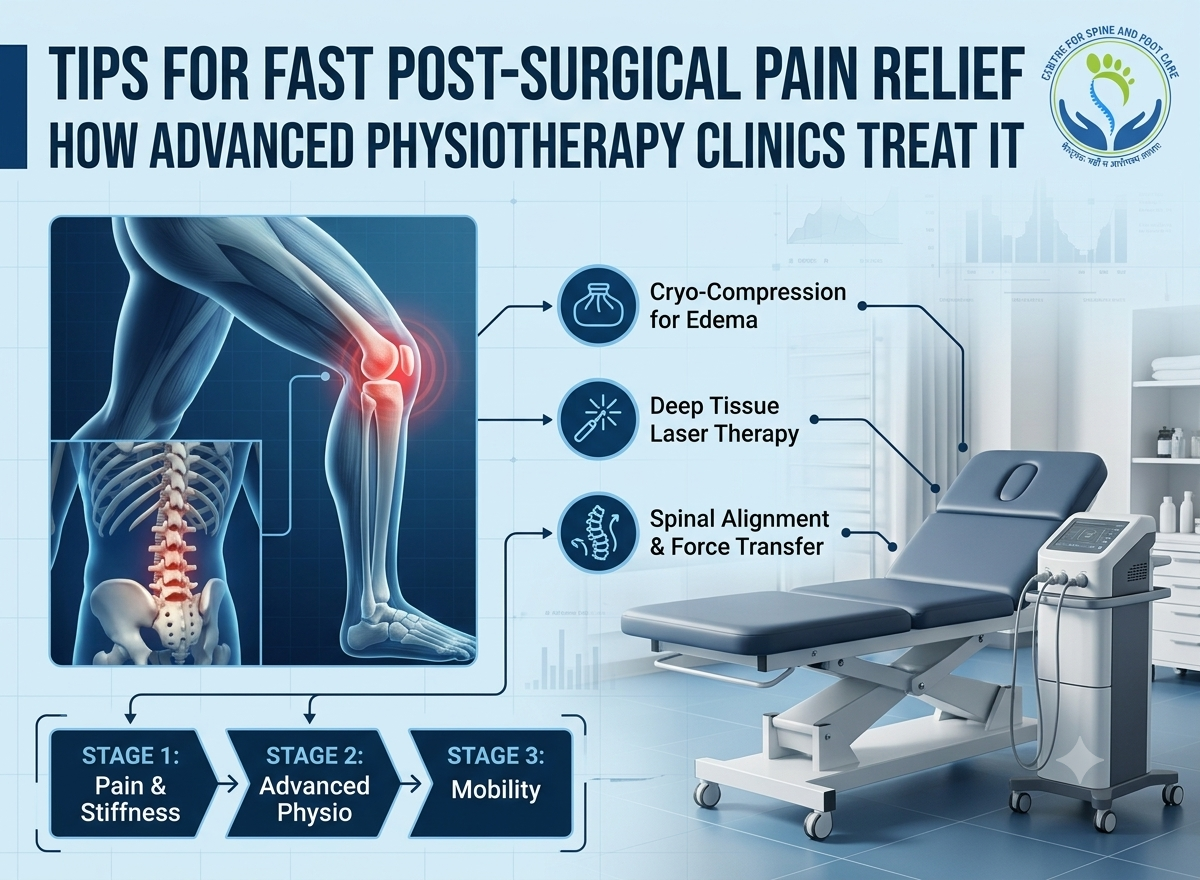
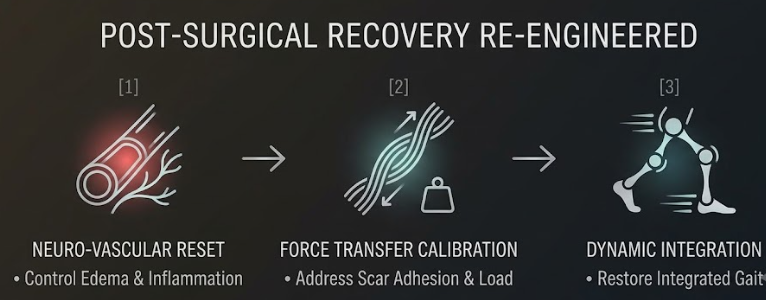
- targeted Lymphatic Drainage & Cryo-Compression: Specialized pneumatic systems pump fluid away from the affected joint capsule toward central drainage hubs, sharply cutting localized throbbing.
- Neuromuscular Electrical Stimulation (NMES): By sending targeted micro-currents through dormant muscle bellies (like the VMO in knee surgeries), therapists re-establish brain-to-muscle pathways without stressing newly sutured tissues.
2. Scar Tissue Desensitization & Deep Fascial Release
As surgical incisions heal, collagen fibers lay down rapidly in chaotic, web-like patterns. Left untreated, these dense scar tissues adhere to underlying fascia, nerve endings, and muscle sheaths, restricting joint excursion and generating sharp internal pain during routine movements.
Visiting a leading physiotherapy clinic in indore ensures that scar tissue is systematically modeled through manual therapy rather than left to harden into permanent restrictions.
Clinical Treatment Techniques:
- Instrument-Assisted Soft Tissue Mobilization (IASTM): Ergonomic medical-grade tools trace myofascial lines to break down rigid adhesions smooth out fibrotic tissue.
- Targeted Laser Therapy: Deep-penetrating light energy speeds up cellular ATP production, facilitating organized collagen realignment along natural lines of mechanical stress.
3. Integrated Spinal & Pelvic Alignment After Surgery
A common oversight in post-surgical care is evaluating only the operated site in isolation. For example, a patient recovering from hip or knee surgery naturally limps to protect the limb. This antalgic gait alters pelvic tilt, strains the lumbar spine, and causes secondary nerve compression.
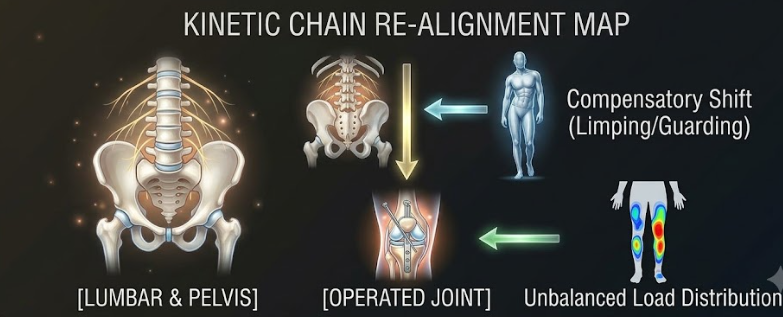
To correct these global compensation patterns, many patients benefit from specialized adjustments at a dedicated chiropractic clinic. Aligning the spinal column alleviates secondary nerve irritation and ensures balanced weight distribution across both sides of the body. Combining physical therapy with targeted chiropractic treatment in indore prevents post-op recovery from turning into chronic lower back or neck pain.
4. Advanced Mechanical Modalities for Targeted Relief
When acute pain limits a patient’s ability to participate in active exercise, modern clinics introduce non-invasive electro-physical modalities to elevate pain thresholds and stimulate deep tissue repair.
| Modality | Primary Post-Surgical Benefit | Clinical Impact |
| Focused Shockwave Therapy | Breaks down deep-seated calcifications & chronic tendinopathies | Accelerates micro-circulation and tendon remodeling |
| High-Intensity Laser Therapy | Reduces deep joint effusion and cellular inflammation | Provides non-pharmacological analgesic effects |
| Spinal Decompression Systems | Relieves disc pressure following spinal procedures | Gently stretches motor segments to promote fluid intake |
Working with a recognized chiropractor in indore alongside senior physical therapists allows patients to receive comprehensive care targeting both structural alignment and soft-tissue repair.
5. Kinetic Chain Recalibration & Progressive Load Bearing
Once acute pain and inflammation subside, treatment shifts toward rebuilding functional capacity. True recovery means returning to full daily activity, sports, or heavy work without fear of re-injury.
Seeking care from the best physiotherapist in indore provides patients with customized functional movement screenings and gait-analysis evaluations.
The 3-Phase Kinetic Rebuilding Protocol:
- Phase A (Isometric & Closed-Chain Control): Strengthening muscles while keeping the joint in a fixed, supported position to minimize shear force.
- Phase B (Eccentric Loading & Dynamic Stability): Training muscles to absorb impact safely as limbs elongate during walking or stair climbing.
- Phase C (Proprioceptive & Balance Training): Utilizing balance boards and functional surfaces to retrain joint position awareness (proprioception) lost during surgery.
Frequently Asked Questions (FAQs)
Q1. How soon after surgery should I start physical rehabilitation?
In most orthopedic procedures, gentle bed-side mobility and neuromuscular activation begin within 24 to 48 hours post-surgery. However, structured outpatient rehabilitation typically starts once your operating surgeon provides clear clinical clearance. Early gentle movement is crucial for blood clot prevention and scar tissue management.
Q2. Is chiropractic care safe after an orthopedic surgery?
Yes, when delivered by a certified practitioner who coordinates closely with your surgical rehabilitation plan. Post-operative chiropractic care does not mean force-adjusting the freshly operated joint. Instead, it focuses on surrounding kinetic structures—such as adjusting pelvic alignment or the thoracic spine—to remove compensatory stress caused by limping or altered postures.
Q3. How does advanced therapy differ from basic home exercises?
While home exercises are an essential component of recovery, advanced clinics utilize high-grade diagnostic tools, precise manual mobilization, and specialized modalities (such as Laser Therapy and Shockwave Systems). These professional interventions desensitize deep nerves, break down internal adhesions, and track biomechanical loads far more accurately than home routines alone can achieve.
Q4. How long does post-surgical pain typically last during rehab?
Acute surgical pain generally decreases over the first 2 to 4 weeks. Residual soreness or stiffness during exercise can persist for a few months as tissues rebuild strength and flexibility. A structured, progressive rehabilitation program helps shorten this timeline and prevents temporary post-op discomfort from developing into chronic pain.