
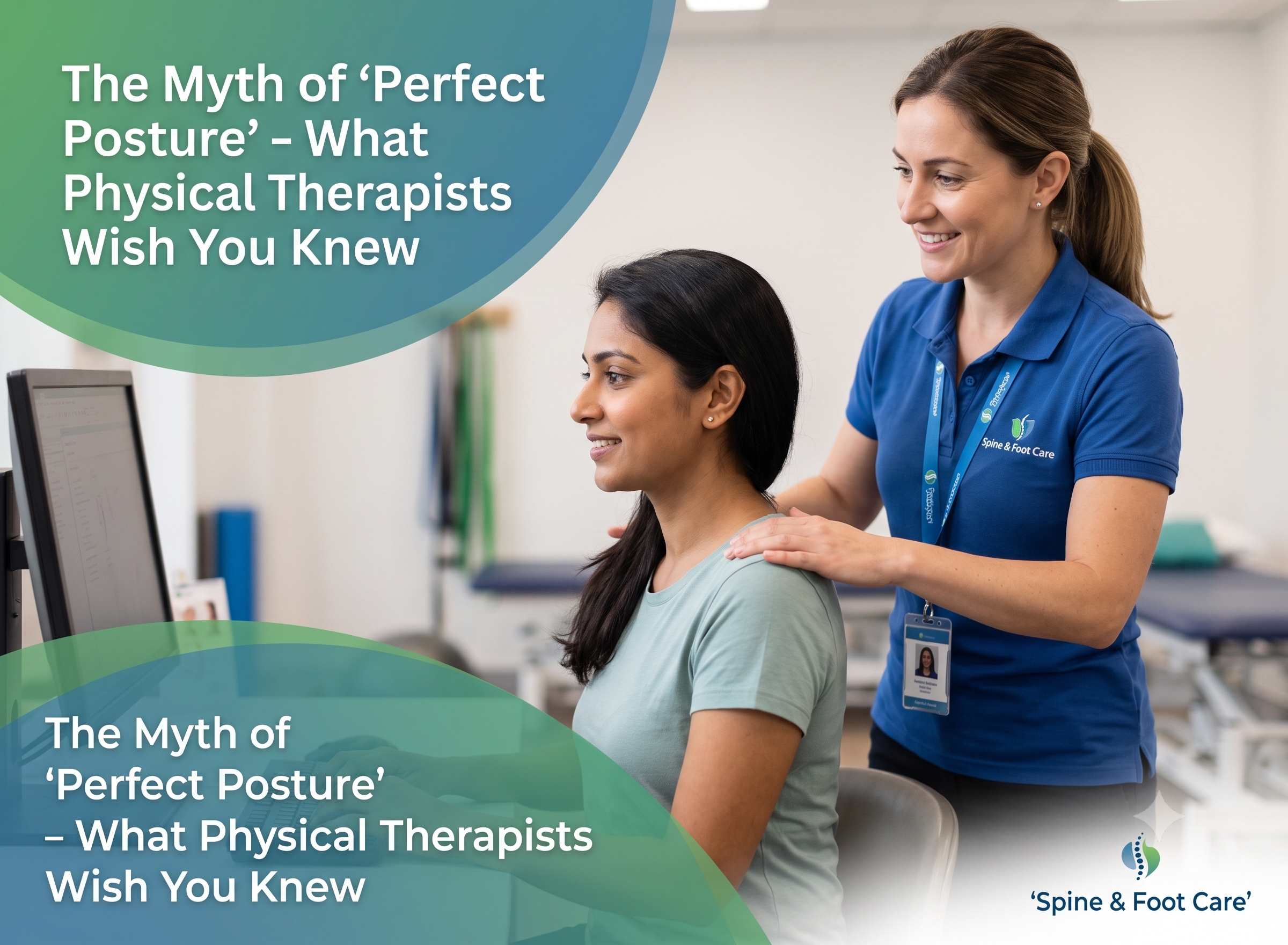
We’ve all grown up hearing the same advice: “Sit up straight!”, “Pinch your shoulder blades back!”, or “Stop slouching!” From a young age, society conditions us to believe that “good posture” means maintaining a perfectly straight, military-style posture at all times.
However, if you ask modern physical therapists, they will tell you a surprising truth: there is no such thing as a single, static ‘perfect posture.’
In fact, forcing your body into a rigid, upright position for hours on end can often cause as much muscular strain, joint stiffness, and fatigue as slouching does. If you’ve been struggling with chronic neck, shoulder, or lower back discomfort despite constantly trying to “sit up straight,” you aren’t alone.
In this article, we’ll break down why rigid posture is a myth, what actually causes postural pain, and how professional posture correction therapy can help you achieve pain-free movement.
The Origin of the “Perfect Posture” Myth
For decades, popular health culture framed human posture as a static architectural frame. We were taught to view our spine like the pillars of a building—if it tilts or leans even slightly, the whole system collapses.
However, human anatomy is dynamic, not static. Research published by the National Institutes of Health (NIH) highlights that the spine naturally possesses natural S-shaped curves designed to distribute biomechanical pressure during movement.
When you force yourself to maintain a artificial “perfect” posture:
- Muscle Fatigue Sets In: Constant isometric contraction of the back muscles leads to metabolic exhaustion, tightness, and spasm.
- Movement Variability Drops: Restricting your spine to one “correct” shape prevents natural tissue lubrication and range of motion.
- Breathing Becomes Shallow: Over-gripping core and upper back muscles limits diaphragmatic expansion.
Key Takeaway: As physical therapists often say: “Your best posture is your next posture.” Movement, flexibility, and strength matter far more than remaining frozen in a straight line.
Why Quick Fixes Fail: Braces vs. Real Therapy
When people begin experiencing postural aches, their first instinct is often to order an online posture-correcting harness or brace. While these devices might pull your shoulders back artificially, they fail to solve the underlying problem.
The Problem with Posture Wearables
When an external device holds your posture up for you, your postural support muscles (such as the rhomboids, middle trapezius, and deep neck flexors) stop working. Over time, these muscles become weaker, leaving you even more dependent on external support and prone to pain once the brace comes off.
The Science-Backed Approach
To fix postural discomfort permanently, you must retrain your neuromuscular system. This is where active posture treatment makes all the difference. Rather than passively forcing alignment, guided therapy identifies structural imbalances, mobilizes stiff joints, and builds endurance in weak muscle groups.
What Does Physical Therapy for Posture Correction Involve?
If you search for posture correction therapy near me, you might wonder what happens inside a clinic. Specialized physical therapy for posture correction goes far beyond telling you to sit straight—it is a comprehensive, individualized assessment and rehabilitation process.
Here is how a targeted rehabilitation plan works:
1. Comprehensive Functional Evaluation
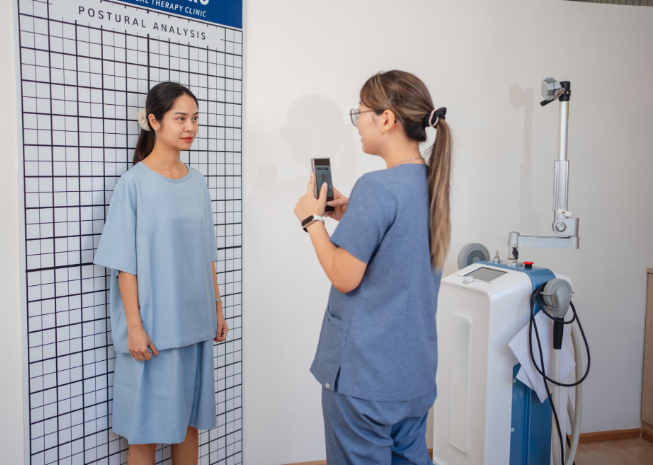
A physical therapist evaluates your static alignment, dynamic movement patterns, joint mobility, and muscular strength. They look for specific syndromes like:
- Forward Head Posture (“Tech Neck”): Straining the cervical spine due to prolonged screen exposure.
- Upper Crossed Syndrome: Tight chest and neck muscles paired with weak upper back muscles.
- Lower Crossed Syndrome: Excessive lower back arching caused by tight hip flexors and weak glutes/core.
2. Joint & Soft Tissue Mobilization
Targeted manual therapy techniques release tight thoracic joints, chest fascia, and neck muscles, restoring your spine’s natural freedom of movement.
3. Neuromuscular Re-Education
Through specific exercises, customized posture correction physical therapy retrains your brain and nervous system to adopt comfortable, energy-efficient body positions naturally throughout the day.
4. Ergonomic Adjustments & Daily Habits
Your therapist evaluates your daily environment—from your office chair to your sleeping setup—ensuring your surrounding space supports healthy movement variability.
Simple Daily Strategies to Improve Posture Naturally
While professional guidance delivers long-term results, you can start adopting healthier postural habits today:
- Follow the 30-Minute Rule: Avoid sitting or standing in any single position for longer than 30 minutes. Shift your posture, stand up, or take a 30-second walking break.
- Incorporate Micro-Stretches: Perform chest doorway stretches, chin tucks, and seated thoracic extensions throughout your workday to undo screen-related tightness.
- Strengthen Your Posterior Chain: Focus on exercises like chin tucks, face pulls, bridges, and bird-dogs to strengthen the muscles that counteract forward slumping.
- Adjust Your Screen Height: Ensure the top third of your computer monitor sits at eye level to prevent forward head positioning.
If chronic pain or stiffness persists despite ergonomic fixes, seeking dedicated posture therapy is the most effective step toward long-term relief.
Frequently Asked Questions (FAQs)
1. How long does it take for posture correction therapy to work?
Most patients begin feeling relief from pain and stiffness within 2 to 4 weeks of starting targeted posture therapy. However, lasting structural adaptations and habit changes typically take 8 to 12 weeks of consistent exercise and clinical guidance.
2. Can adults fix long-term bad posture?
Yes! While your skeletal structure is mature, muscle tissue, connective tissue, and neuromuscular patterns remain adaptable throughout life (a concept known as neuroplasticity). With proper posture correction therapy, adults of any age can significantly improve their alignment, flexibility, and comfort.
3. Is posture therapy painful?
No. Specialized physical therapy for posture correction should never cause severe pain. You may experience mild muscular fatigue or stretch sensation as neglected muscles reactivate, but treatment is tailored carefully to your tolerance.
4. What is the difference between a posture brace and physical therapy?
A posture brace is a passive support that holds your body in place, which can weaken your muscles over time. In contrast, posture correction physical therapy actively strengthens weak muscles, mobilizes stiff joints, and trains your body to maintain healthy alignment independently.