
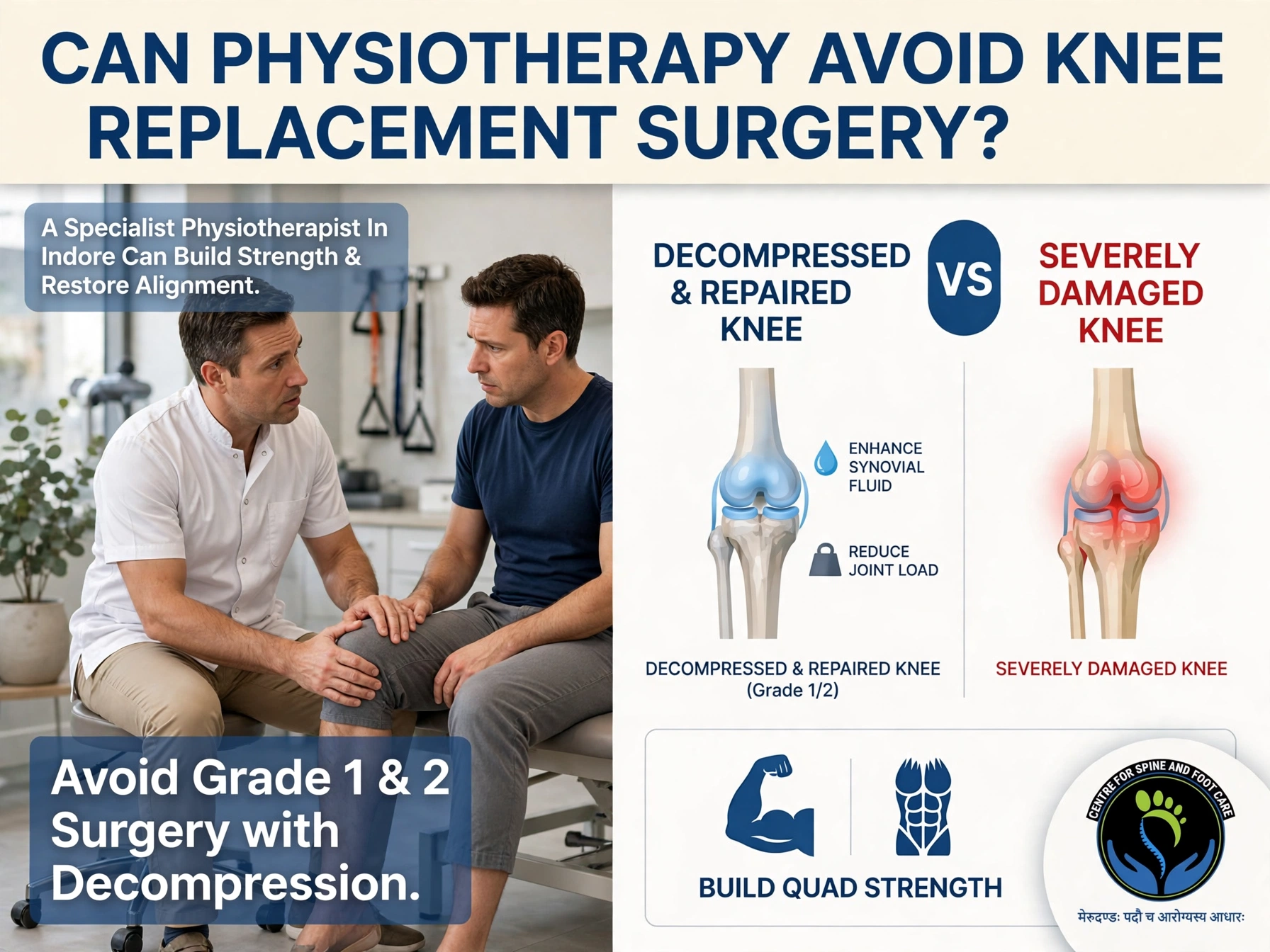
Chronic knee pain can make even simple activities like taking a stroll around your neighbourhood or climbing a flight of stairs feel like a daunting task. When severe joint wear and tear occurs, many individuals are told that total knee replacement (TKR) is their only option. But is surgery truly inevitable?
For millions of patients suffering from degenerative joint conditions, advanced non-invasive care offers hope. By opting for focused care from a skilled physiotherapy clinic in Indore, you can strengthen the surrounding structures, restore joint mechanics, and potentially avoid or delay surgical intervention.
What, Why, & How: Understanding Non-Surgical Knee Care
1. What Is Happening to Your Knee Joint?
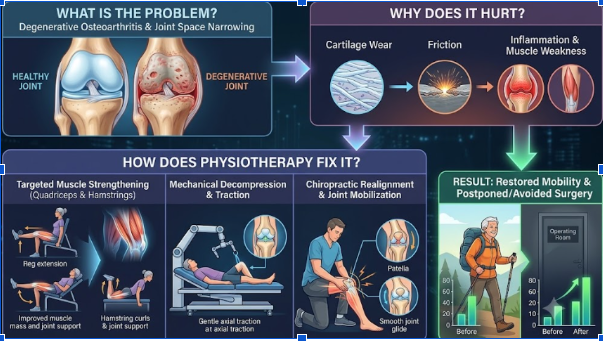
Knee pain often stems from conditions such as osteoarthritis (OA), meniscus tears, or ligamentous strain. In knee OA, the protective cartilage that cushions the ends of your bones wears away gradually, leading to reduced joint space, painful friction, and stiffness.
2. Why Does the Pain Worsen Over Time?
When your joint space narrows, the biomechanical alignment shifts. The body adapts by tightening surrounding soft tissue, while supporting muscles—such as the quadriceps, hamstrings, and glutes weaken from underuse. This creates a vicious cycle: weaker muscles pass more weight directly onto damaged joint surfaces, accelerating wear and tear.
3. How Does Specialized Physiotherapy Reverse This Cycle?
Physiotherapy target the underlying root causes rather than simply masking symptoms with medications. Through targeted rehabilitation, a skilled physiotherapist in indore near me works to:
Offload Joint Pressure: Rebuilding surrounding muscle strength takes direct mechanical strain off the internal joint structure.
Restore Biomechanical Alignment: Integrating spinal, pelvic, and lower-limb adjustments under the guidance of a top chiropractor in indore ensures weight is distributed evenly across both legs.
Enhance Joint Lubrication: Controlled physical movement stimulates the synovial membrane to produce healthy joint fluid, improving flexibility.
Avoiding or Delaying Knee Surgery in Grade 1 and Grade 2 Osteoarthritis
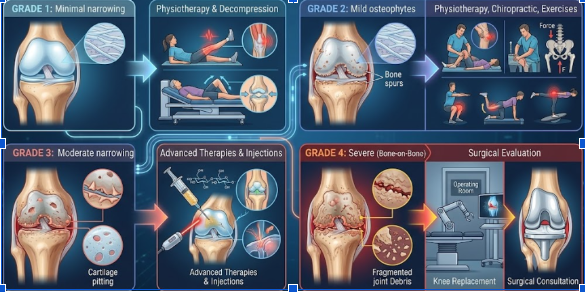
Osteoarthritis is graded on a clinical scale from Grade 1 (mild) to Grade 4 (severe). For patients classified under Grade 1 (doubtful/early joint narrowing) and Grade 2 (mild wear with minor osteophyte formation), immediate surgery is rarely necessary.
The Role of Mechanical Knee Decompression
One of the most effective interventions for Grade 1 and Grade 2 cases is targeted Knee Decompression Therapy.
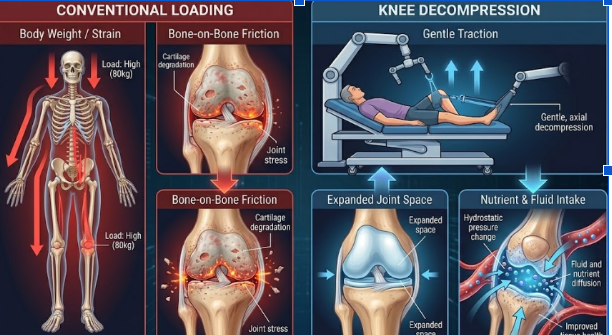
Knee decompression utilizes a gentle mechanical traction table that applies precise, controlled longitudinal force to the knee joint. This separation creates a temporary negative intra-articular pressure inside the joint capsule.
By opening up the joint space by fractions of a millimeter during therapy, this treatment achieves several critical physiological benefits:
- Vacuum Effect for Nutrient Flow: The negative pressure vacuum draws oxygen, hydration, and nutrient-rich synovial fluid back into damaged cartilage and meniscus tissue to support repair.
- Immediate Pain Mitigation: By pulling joint surfaces apart, compression on sensitive nerve endings is lifted, offering swift pain relief without drugs.
- Halting Disease Progression: Combined with strength training, decompression stops early-stage wear from advancing to Grade 3 or 4, effectively postponing or indefinitely bypassing total knee surgery.
Consulting the best physiotherapist in indore helps determine if knee decompression combined with chiropractic treatment in indore suits your joint health goals.
Verified Medical Statistics: What the Data Says
Evidence shows that comprehensive, non-surgical physical therapy is highly effective for knee management:
- Avoiding Surgery: Clinical trial evidence shows that structured, supervised physical therapy helped up to 95% of patients delay or completely avoid total knee replacement surgery
High Surgical Success, But Prevention First: Total knee replacements maintain a 90% to 95% success rate in India. However, medical guidelines emphasize exhausting non-surgical methods first due to surgical risks, extensive downtime, and finite implant lifespans.
Exercise as Primary Intervention: Over 200 clinical reviews confirm that resistance training, quadriceps strengthening, and low-impact movement offer the highest level of non-surgical pain reduction and functional recovery.
How Integrated Physical & Chiropractic Care Works Together
Treating knee pain effectively requires looking beyond the knee joint itself. Postural imbalances in the hips, sacrum, or lumbar spine alter your gait, placing uneven weight on one knee.By consulting a specialized best physiotherapy center in indore like Spine and Foot Care, you receive a holistic treatment program that combines manual therapy, knee decompression, biomechanical realignment, and custom exercise routines under one roof.
Real Patient Testimonials
“I was advised to undergo knee replacement surgery for Grade 2 Osteoarthritis. I decided to try non-surgical treatment at Spine and Foot Care first. After completing 12 sessions of targeted physiotherapy and knee decompression, my severe pain vanished. I can walk comfortably again without a limp!”
Rajesh Sharma (58, Indore)
“Finding a reliable physiotherapist in indore made all the difference. The combination of gentle chiropractic alignment and personalized exercises helped me avoid surgery entirely. Highly recommended!”
Priya Mehta (62, Indore)
Summary of the Blog
This guide explores how non-surgical modalities—including custom exercise protocols, specialized manual physical therapy, chiropractic gait correction, and knee joint decompression—can help patients manage knee osteoarthritis. For individuals diagnosed with Grade 1 or Grade 2 knee OA, non-invasive physical therapy reduces pressure on joint surfaces, builds supporting muscle strength, restores mobility, and frequently eliminates the need for total knee replacement surgery.
Frequently Asked Questions (FAQs)
1. Can physiotherapy completely replace knee surgery?
For Grade 1 and Grade 2 osteoarthritis, specialized physiotherapy and knee decompression can significantly reduce pain, rebuild joint function, and allow many patients to avoid surgery entirely. In advanced Grade 4 (severe bone-on-bone) cases, therapy still plays a vital role in preparing the joint or aiding post-surgical recovery.
2. How many sessions of knee decompression therapy are needed?
Most patients require between 10 to 20 structured sessions depending on joint degeneration severity. Relief often begins within the first few weeks.
3. Why should I see both a chiropractor and a physiotherapist in Indore?
A chiropractor resolves underlying spinal, pelvic, and leg-length compensations affecting your stride, while a physiotherapist builds muscle strength and joint stability. Together, they deliver a balanced, holistic recovery plan.
4. Is knee decompression therapy painful?
No. Knee decompression uses gentle, computer-controlled traction designed to relieve joint pressure safely. Most patients find the stretching sensation comfortable and relaxing.